
If your saddle is wrong, no amount of adjustment elsewhere will make your bike comfortable.
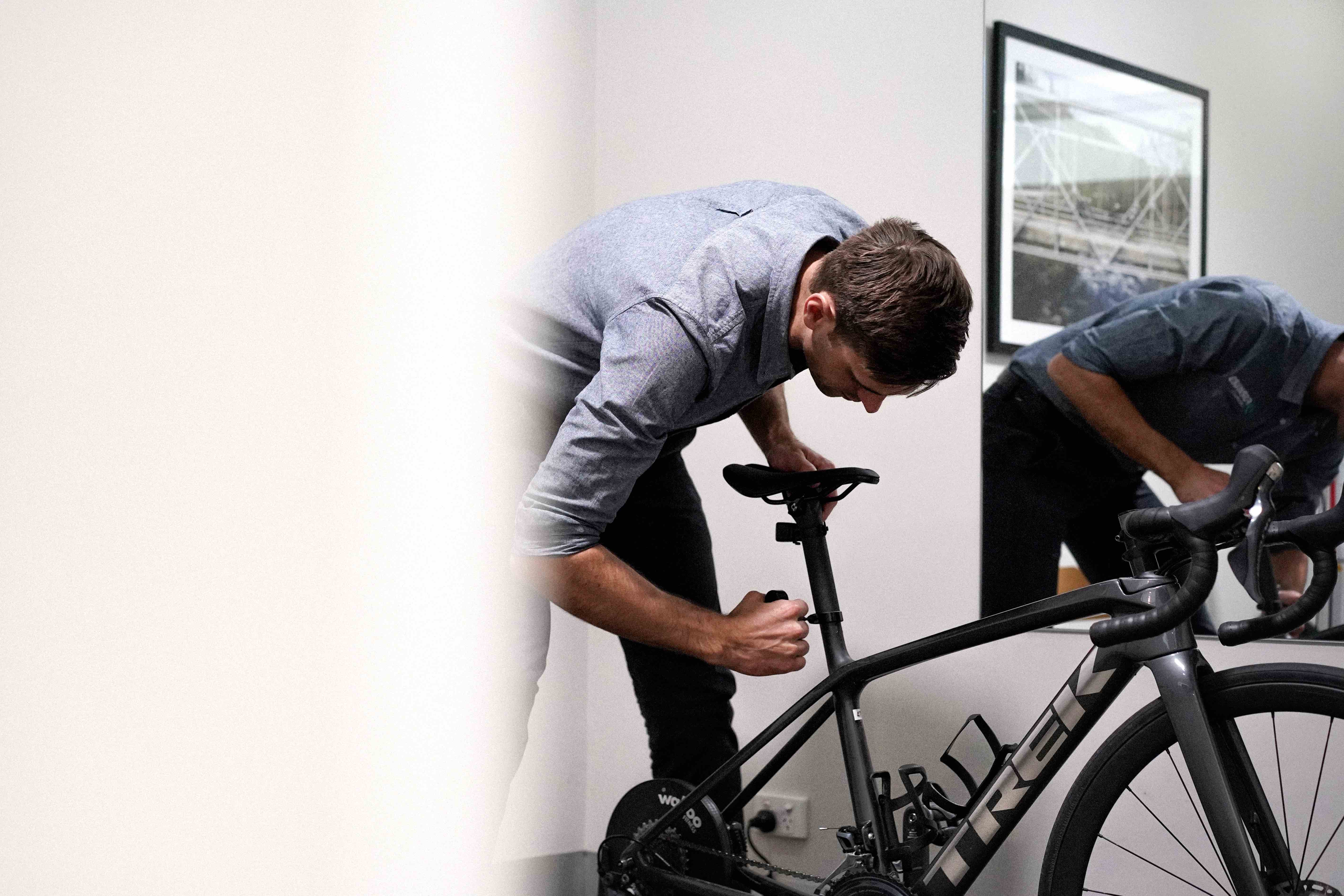
After more than 5 years of fitting bikes for Melbourne cyclists — from weekend warriors to racers, commuters to triathletes — I can confidently say this:
If your saddle is wrong, no amount of adjustment elsewhere will make your bike comfortable.
Yet despite its importance, the saddle is still one of the most misunderstood components on the bike. Many cyclists will happily spend thousands on frames, wheels, and drivetrains, while riding a saddle that’s completely unsuitable — or poorly set up — and wondering why they’re dealing with pain, numbness, or recurring injuries.
The saddle is your primary point of contact with the bike. It supports a large percentage of your body weight and directly influences how you interact with the pedals, handlebars, and even your breathing. Get it wrong, and your body compensates in all the wrong places.
In my experience, there are five critical aspects every cyclist must consider when selecting and setting up a saddle:
Let’s break each of these down and explain why they matter so much.
Saddle height is often the first adjustment cyclists make — and just as often, it’s wrong.
If the saddle is too high, riders commonly experience:
If the saddle is too low, it can lead to:
What many cyclists don’t realise is that saddle height isn’t just about leg extension. It directly affects pelvic stability, pressure distribution, and how comfortably you can sit on the saddle.
Even small changes — as little as 3–5 mm — can dramatically alter comfort and efficiency. This is why saddle height should never be guessed or copied from someone else’s setup. It needs to be assessed dynamically, considering your pedalling mechanics, flexibility, riding discipline, and injury history.
One of the most common mistakes I see is cyclists riding saddles that are simply too narrow.
Your saddle should support your sit bones (ischial tuberosities) — not soft tissue. If the saddle is too narrow, your pelvis sinks inwards, increasing pressure on nerves and blood vessels. This often results in:
On the flip side, a saddle that’s too wide can cause:
Saddle width is not determined by body size or gender — it’s determined by pelvic anatomy and riding posture. A more upright rider typically needs a wider saddle, while an aggressive road or time trial position may require narrower support — but still wide enough to support the sit bones correctly.
This is one of the biggest reasons off-the-shelf saddle recommendations fail. Without assessing pelvic width and posture, it’s largely guesswork.
Saddle angle is subtle — but incredibly powerful.
Many cyclists assume the saddle should be perfectly level. While that can be a good starting point, it’s not always optimal.
A saddle that’s angled nose-up can:
A saddle angled too far nose-down can:
The goal of saddle angle is to allow the pelvis to sit in a neutral, supported position, while enabling natural pelvic rotation for your riding posture.
In practice, we’re often talking about changes of 1–2 degrees — but those small adjustments can be the difference between discomfort and long-term comfort.
Saddle fore/aft (how far forward or back the saddle sits on the rails) is often misunderstood and incorrectly adjusted based on outdated rules.
This position influences:
A saddle too far back may:
A saddle too far forward may:
Correct fore/aft positioning helps place the rider in balance — allowing efficient power transfer through the pedals while maintaining upper body relaxation. It should always be assessed in conjunction with saddle height and handlebar position, not in isolation.
Finally, saddle shape and design.
This is where many cyclists get caught chasing the “latest” or “most popular” saddle, rather than the right saddle.
Key design factors include:
Some riders thrive on flat saddles that allow easy position changes. Others need a curved shape for consistent pelvic support. Cut-outs can relieve pressure for some cyclists — but for others, they can create new pressure points.
There is no universal “best saddle” — only the best saddle for you, your anatomy, and how you ride.
This is why testing, observation, and real-world feedback matter far more than brand names or marketing claims.
In my experience, the majority of cycling discomfort issues — numbness, knee pain, lower back pain, saddle sores — can be traced back to poor saddle choice or incorrect setup.
And the biggest mistake cyclists make is trying to solve these issues by:
A well-fitted saddle doesn’t draw attention to itself. It simply disappears beneath you, allowing you to focus on riding stronger, longer, and pain-free.
If there’s one takeaway from this deep dive, it’s this:
The saddle is not just a seat — it’s the cornerstone of your entire bike fit.
Get it right, and everything else falls into place.
Please click book online to make an appointment.
If you have any questions or feedback, feel free to fill out the form, call or send an email to admin@forwardbikefit.au
We would love to hear from you!
📍 29 Stubbs Street, Kensington, Victoria 3031

